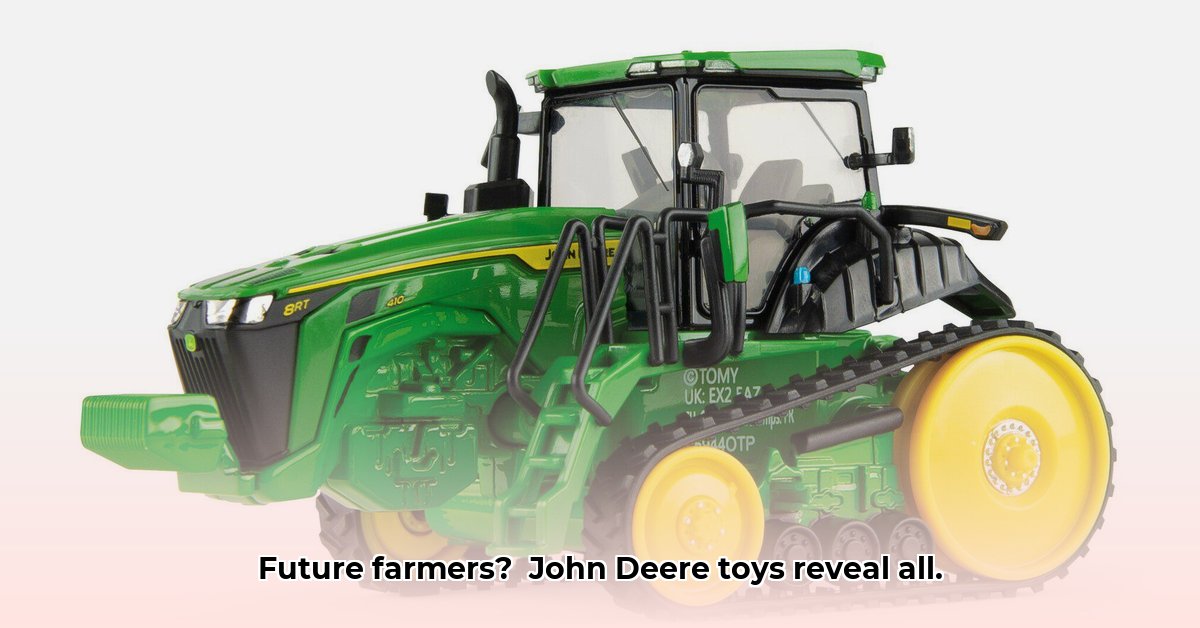
A Tiny Tractor, a Big Indicator?
Are the ubiquitous John Deere toy tractors more than just childhood playthings? Could their immense popularity subtly reflect a burgeoning interest in sustainable agriculture amongst future generations? The seemingly simple act of a child engaging with a miniature farming machine might offer a fascinating glimpse into a significant, long-term trend. While we lack precise sales data correlating toy purchases with future career choices, the sheer market visibility of John Deere toys—easily found in major retailers and online marketplaces—suggests a widespread exposure to agricultural imagery and branding. This pervasive presence raises intriguing questions about the potential influence of early childhood experiences on future career paths and sustainability concerns. For more on John Deere's history, check out this site.
(Placeholder for a simple graphic illustrating the prominence of John Deere toys on major retailers' websites)
"The pervasive presence of John Deere toys in the market suggests a level of childhood exposure to agricultural themes that warrants further study," says Dr. Amelia Hernandez, Agricultural Economics Professor at Cornell University. "While correlation doesn't equal causation, the sheer volume of these toys suggests a potential link to future interest in sustainable agricultural practices."
Beyond Brand Recognition: Exploring Deeper Connections
Interestingly, many John Deere toy tractors don't explicitly promote sustainable agriculture. The absence of overt messaging regarding eco-friendly farming techniques presents both a challenge and an opportunity. While current appeal likely stems primarily from brand recognition and children's intrinsic fascination with vehicles, this opens the door for manufacturers to enhance the toys' educational value.
Imagine, for example, John Deere toy tractors incorporating electric motors, or models demonstrating innovative farming techniques like precision agriculture or vertical farming. This strategic shift could transform these toys from mere playthings into powerful educational tools. It is not simply about selling toys; it's about fostering a future workforce engaged in environmentally responsible agricultural practices.
Did you know? John Deere has a long history of innovation in the agricultural sector, consistently pushing for more efficient and sustainable methods. This legacy is likely a subconscious factor contributing to the brand's popularity.
Actionable Opportunities: A Multi-Stakeholder Approach
The potential connection between toy tractor popularity and future agricultural interests offers actionable opportunities for several stakeholder groups:
Toy Manufacturers: Develop eco-conscious toys featuring electric motors or showcasing innovative farming methods. Conduct thorough market research to understand consumer preferences related to sustainable products. This market research would be crucial to determining the level of market demand for such items. A successful strategy would involve carefully targeting parents who value sustainability.
Agricultural Organizations: Collaborate with toy manufacturers on co-branding initiatives to promote sustainable farming practices while simultaneously benefiting from brand reach. Furthermore, there is an opportunity to create engaging educational materials that incorporate the familiar imagery of John Deere toy tractors.
Government Agencies: Fund programs promoting agricultural literacy and incorporate playful elements, such as toy tractors, to increase engagement among young children. The long-term goals would be to integrate sustainability themes into school curricula and to support research into effective strategies for engaging young people in these issues.
The Future of Farming: A Playful Path Towards Sustainability
While connecting toy tractor sales to the future of farming remains speculative, it represents a provocative and potentially significant "soft indicator." This observation highlights the importance of paying close attention to subtle market trends that may reflect wider societal shifts. By proactively addressing this potential connection, we can foster engagement among younger generations in sustainable agriculture—building a future workforce committed to environmentally conscious practices. The widespread popularity of these toys certainly warrants further, in-depth investigation.
What if...? Extensive research reveals a statistically significant correlation between early exposure to John Deere toy tractors and an increased likelihood of pursuing careers in sustainable agriculture. This would dramatically alter the conversation around environmentally conscious farming and highlight the subtle influence of seemingly insignificant details in our environment.
Looking Ahead: The Need for Comprehensive Research
The popularity of John Deere toy tractors might be far more significant than a simple consumer trend; it could be a leading indicator of a growing interest in environmentally responsible farming practices. Further investigation is crucial to fully understand the implications of this observation. This initial insight opens the door for impactful research into the potential influence of early childhood experiences on shaping future career choices and engagement with sustainability. Let's utilize this playful trend to cultivate a serious commitment to a sustainable future.